Stay In This World
The stories, the culture, the conversations. Every week.
No spam. No third parties. Just Unruly.
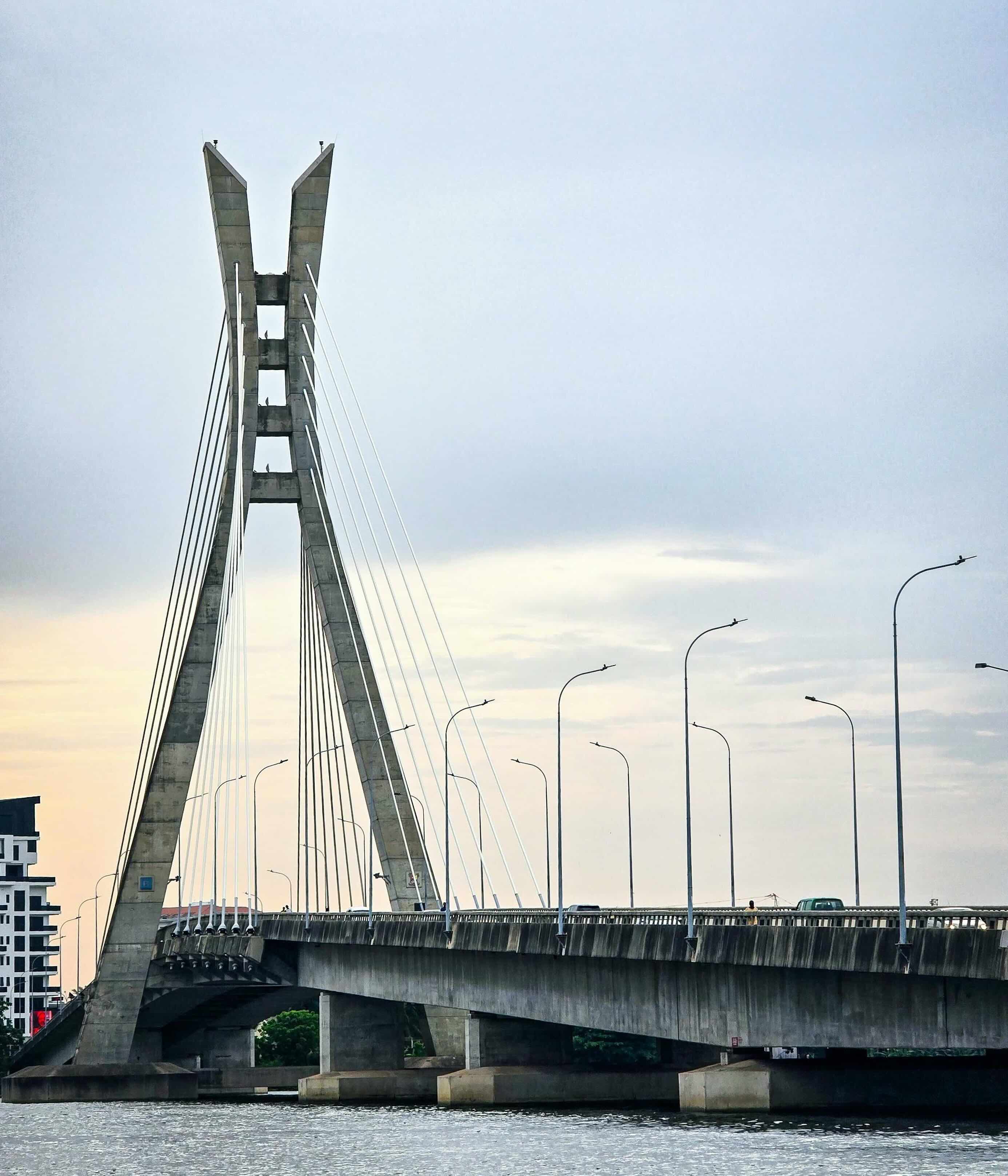
Picture this: it's a Sunday afternoon in Lagos and you're driving across the bridge to Ikoyi for a gathering of "creative minds" — artists, designers, founders, lifestyle entrepreneurs. The ticket wasn't cheap, but you told yourself it would be worth it. You arrive and it is exactly as advertised: minimalist furniture, thoughtful lighting, a curated playlist humming softly in the background. People are laughing, networking, exchanging Instagram handles. For a brief moment, it feels like you've stepped into a version of Lagos that mirrors your desires, a community that comes together with intentionality.
And yet, beneath the aesthetic ease, you can't help but wonder: in a country where community has historically been informal, improvised, and class-bound, what exactly are we building when we call these places "third spaces"?
The term "third space" was coined by sociologist Ray Oldenburg in his 1989 book The Great Good Place to describe social environments outside the home and the workplace that support psychological wellbeing and reduce isolation. Spaces where conversation flows easily, hierarchy softens, and belonging is not something you earn but something you inhabit.
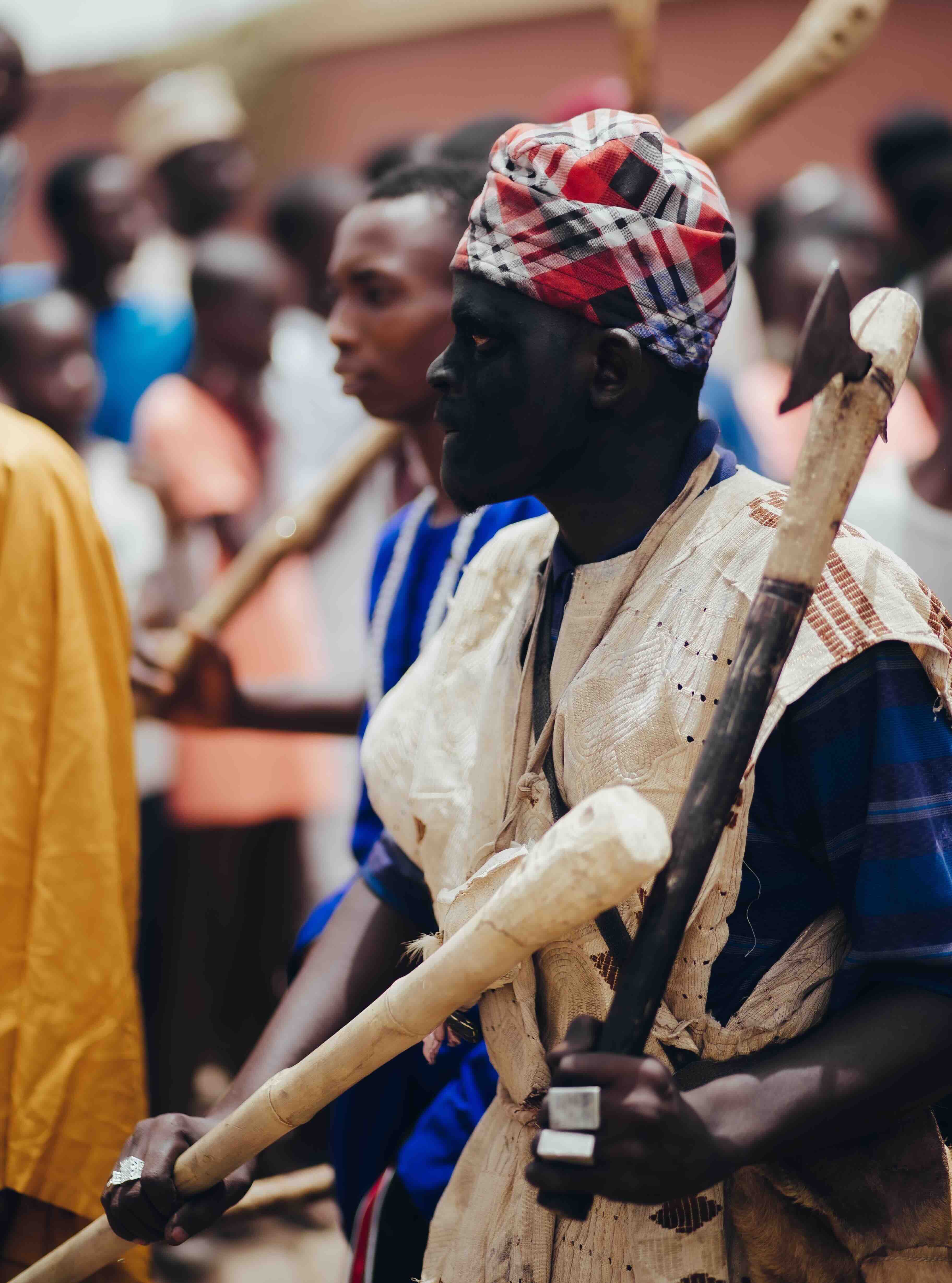
By this definition, Lagos has always had spaces to commune. Churches and mosques anchor neighbourhood life. Buka joints and beer parlours spill into the streets. Weddings, naming ceremonies, and funerals double as reunions. Community in Nigeria has rarely required a formal label.
.jpeg)
But these spaces are not without limits. Religious institutions are structured around shared beliefs and moral codes. Informal hospitality spaces can be vibrant but are often gendered, age-bound, or class-coded. Access has always been negotiated. Belonging, in practice, has rarely been neutral.
What we are witnessing now feels distinct. A new crop of third spaces has emerged in Lagos over the past five to six years, deliberately irreligious, aesthetically curated, and positioned as neutral ground for "creatives," "founders," and "community." They promise inclusivity without doctrine. They market intimacy without obligation. They are consciously secular and aspirational, spaces where diverse interests converge under the soft glow of intentional design.
But are these spaces truly neutral ground, or are they simply new forms of gatekeeping dressed in minimalist furniture and Instagrammable lighting?
To answer that, we must look at the city itself: the migration patterns of its diaspora, the purchasing power of its middle class, the exhaustion of its young professionals, and the social hunger of its Gen-Z adults. We must examine geography. Pricing. Programming. The quiet rules of entry.
Only then can we ask the harder question: are Lagos' emerging third spaces expanding access to community, or refining it?
To understand the present moment, we must return to an earlier one.
The early 2000s through the mid-2010s marked a subtle but significant shift in Lagos' social infrastructure. This was the era of return. Nigerian millennials who had studied or worked abroad began moving back to Lagos to build businesses in fashion, music, media, and technology. Their tastes, shaped by cities like London, New York, and Atlanta, demanded spaces that did not yet exist locally.
Concept stores like L'Espace and Stranger Lagos emerged as cultural laboratories rather than mere retail outlets. Café Neo expanded the language of coffee culture beyond roadside kiosks into something curated and cosmopolitan. A White Space provided a platform for art and interdisciplinary programming. These were not just businesses; they were signals. They suggested Lagos could participate in global creative conversations without apology.
Stranger Lagos, in particular, became a blueprint. Its aesthetic felt like Dover Street Market meets Community Goods, fashion, art, sustainability, and intellectually rich dialogue layered into one environment. But its cultural relevance extended beyond design. For many young Lagosians who did not fit neatly into the conservative, cis-heteronormative expectations of mainstream society, it offered something rare: ambiguity. It was a place where difference did not immediately require explanation.
Alongside these concept-driven spaces came the co-working wave. The opening of CCHub in 2010, and later HubOne, reflected the rapid growth of Nigeria's tech ecosystem. These were workspaces first, but they also doubled as community hubs. The language of innovation became intertwined with the language of belonging through networking events, pitch nights, and panel discussions.
And here, the lines began to blur. In a city where survival is income-driven and public space is deeply commercial, where street vending and daily hustle define urban life, recreation has rarely been insulated from commerce. Leisure, for many Lagosians, is not a right but a privilege. The merging of work and social life in co-working environments was not accidental; it was symptomatic. Community had to justify itself economically.
Then came the closures. L'Espace shut down. Stranger Lagos closed its doors in 2018. Café Neo eventually followed. A White Space transitioned fully into AWCA, its creative agency arm. Wère House shifted toward functioning primarily as an event venue rather than a consistently programmed community space.
Several forces converged: currency instability, rising operational costs, increased outward migration among millennials, and eventually the COVID-19 pandemic. As economic uncertainty intensified, many patrons gravitated back toward more traditional institutions, particularly religious communities, which offered familiarity and lower barriers to entry.
What did these closures reveal? Perhaps that Lagos desired third spaces culturally but had not yet built the economic scaffolding to sustain them. Perhaps that aspirational aesthetics alone cannot withstand macroeconomic volatility. Or perhaps that third spaces in Lagos must contend with something Oldenburg did not fully theorise: the realities of a city where social life is constantly negotiating with survival.
The resurgence we see today does not emerge from a vacuum. It stands on the memory, and fragility, of what came before.
If the earlier wave of third spaces in Lagos was shaped by millennials returning home to build, the current resurgence feels shaped by a generation trying to survive, build, and belong.
Gen-Z adulthood in Nigeria has unfolded in an era of digital saturation. Community now often begins online: in group chats, Instagram pages, niche Twitter threads, TikTok comment sections, Discord servers. Identity is curated in public before it is tested in private. It makes sense, then, that many of today's third spaces are born from digital momentum. A community forms virtually first; the physical gathering comes later.
There is a practical logic to this. Social media reduces risk. It allows organisers to gauge interest before committing to rent, logistics, and programming. But digital intimacy has its limits, and the mass isolation imposed by the COVID pandemic in 2020 sharpened that awareness. Hyper-connectivity did not eliminate loneliness; in many cases, it magnified it. What followed was a renewed appetite for presence: shared air, shared laughter, and the subtle reassurance of bodies occupying the same room.
Enter: Gather House. 16by16. Nahous. Suudu Lagos. The Joydragger's House. Each operates with its own logic, its own programming, its own sense of who it wants to welcome. Some position themselves as galleries. Others as concept stores with café corners. Some host film screenings and panel discussions. A few double as co-working environments during the day before transforming into event venues at night.
The language they use is telling. Words like "intentional," "curated," "safe," and "community-led" appear frequently in promotional materials. They signal distance from chaos, from the Lagos that overwhelms. They promise order, thoughtfulness, a kind of respite that feels increasingly rare.
But who, exactly, gets to rest? If you mapped Lagos' third spaces on paper, a pattern would emerge immediately. The majority cluster on the city's Island axis: Lekki Phase I, Victoria Island, Ikoyi. A few venture into transition zones like Yaba and Surulere. Surulere hosts The Joydragger's House, which remains the clearest mainland outlier. Beyond that, silence.
This is not a coincidence. Real estate on the Island is expensive, yes, but it also carries social legibility. The addresses alone communicate something about the kind of person expected to walk through the door. An event in Lekki Phase I reads differently than one in Agege or Oshodi, even if the programming is identical.
Geography in Lagos has always functioned as shorthand for class. Where you live, work, and socialise telegraphs income, aspiration, mobility. Third spaces inherit this logic. They may not articulate class barriers explicitly, but location does the work for them.
Consider entry costs. A six-figure ticket for a Sunday gathering. A café minimum spend that rivals a week's groceries. These are not prohibitive for Lagos' upper-middle class: the tech founders, corporate executives, and so on. But for the vast majority of young Lagosians navigating entry and mid-level salaries, freelance instability, or unemployment, these numbers represent real choices: attend an event or pay transport for the week.
Some third spaces offer a counter-narrative, operating with a different set of assumptions. Their programming leans toward accessibility: affordable film screenings, book clubs, free open mics. Yet even the exceptions reveal something. Mainland Lagos, home to millions, remains largely unserved by the current third space wave. The infrastructure of intentional gathering continues to concentrate where purchasing power already exists.
Walk into most third spaces on a weekday afternoon and you will see them: the laptops. Open screens, AirPods in, someone nursing a single Americano for three hours while answering emails. This is the inheritance from the co-working era, the assumption that social space and productive space can and perhaps should coexist.
On the surface, this seems practical. Lagos traffic is unforgiving, and for freelancers without dedicated office space, a well-lit café with strong WiFi provides structure. But something shifts when productivity colonises a space meant for rest. The café becomes an office. The lounge becomes a meeting room. The third space collapses into an extension of work.
Oldenburg was specific about this. Third spaces thrive on conversation, on accidental encounters that happen when people are not performing roles. But when everyone is working, everyone is performing. Conversation becomes networking. Presence becomes productivity. Even rest starts to feel like it requires output.
Some spaces have tried to draw boundaries. Suudu Lagos markets itself primarily as a creative hub for events. Gather House leans into curated programming: brand-building sessions, ceramic workshops, shopping events. The Joydragger's House prioritises gatherings over drop-ins. But the pressure remains. In a city where rent is high and foot traffic can be inconsistent, programming alone does not pay the bills. And so the laptops return.
Most third spaces today have learned from earlier closures. Many operate as hybrid models, part café, part event venue, part retail space, part gallery. Revenue is diversified, programming is ticketed, and brand partnerships help offset costs. This pragmatism makes sense. But it raises a tension: if a space must constantly generate income to survive, can it ever truly function as a third space in Oldenburg's sense, a place where the primary currency is presence, not transaction?
The answer varies by space and sustainability. And judging by the country's current economic outlook, this sector remains fragile. The spaces that survive will likely be the ones that accept hybridity, that stop trying to be purely social and embrace being partially commercial. The dream of a truly open, accessible, non-transactional third space in Lagos remains largely aspirational.
There is something deeply revealing about the fact that intentional community building in Lagos increasingly requires a ticket, a location on the Island, and a social media presence to verify its legitimacy.
It suggests that informal community, the kind that happens in beer parlours, church halls, family compounds, and street corners, is no longer sufficient for a certain class of young Lagosians. Or perhaps, more accurately, it no longer feels like it belongs to them.
The rise of third spaces reflects genuine hunger. People want to gather outside the watchful eye of family. They want spaces that are not dictated by religious affiliation or ethnic identity. They want environments where conversation can be intellectual without being performative, where intimacy does not require lifelong commitment.
These are reasonable desires. The issue is not the desire itself but the infrastructure required to meet it, and who that infrastructure ultimately serves.
Lagos has always been a city of proximity without integration. Millions occupy the same geography but move through entirely different cities. The Island and the Mainland are not just locations; they are economies, ideologies, realities. Third spaces, as currently constituted, largely reflect one Lagos: the aspirational, globally connected, digitally fluent Lagos. The other Lagos, the one navigating survival with less margin for experimentation, remains largely outside the frame.
This is not unique to Lagos. Cities everywhere stratify. Community has always been classed, raced, gendered. The promise of third spaces was supposed to be that they could transcend some of that. Whether it is possible in 21st-century Lagos is still an open question.
So what would it take to make third spaces truly accessible in Lagos? Lower costs? More mainland locations? Community ownership rather than individual entrepreneurship? Public investment rather than private funding? But even imagining this reveals the deeper problem: in a city where public infrastructure barely functions, the idea that social space could be a public good rather than a private commodity feels almost naive.
And so third spaces remain what they have always been in Lagos: beautiful, fragile, necessary, and insufficient. They offer glimpses of a different kind of city. But they cannot, on their own, build it.
My mind returns to that Sunday afternoon in Ikoyi. The lighting is still warm. The playlist still hums. The room still feels charged with possibility. For a few hours, the city feels arranged, intentional, softened, almost hopeful.
And perhaps that is the most honest thing we can say about third spaces in Lagos: they exist because the need is real. But the need is bigger than what any curated room, however thoughtfully designed, can hold.