Stay In This World
The stories, the culture, the conversations. Every week.
No spam. No third parties. Just Unruly.
How British-Nigerian artist Ṣọlá Olúlọ̀de's first major solo presentation in Lagos became a meditation on diaspora identity, cultural authenticity
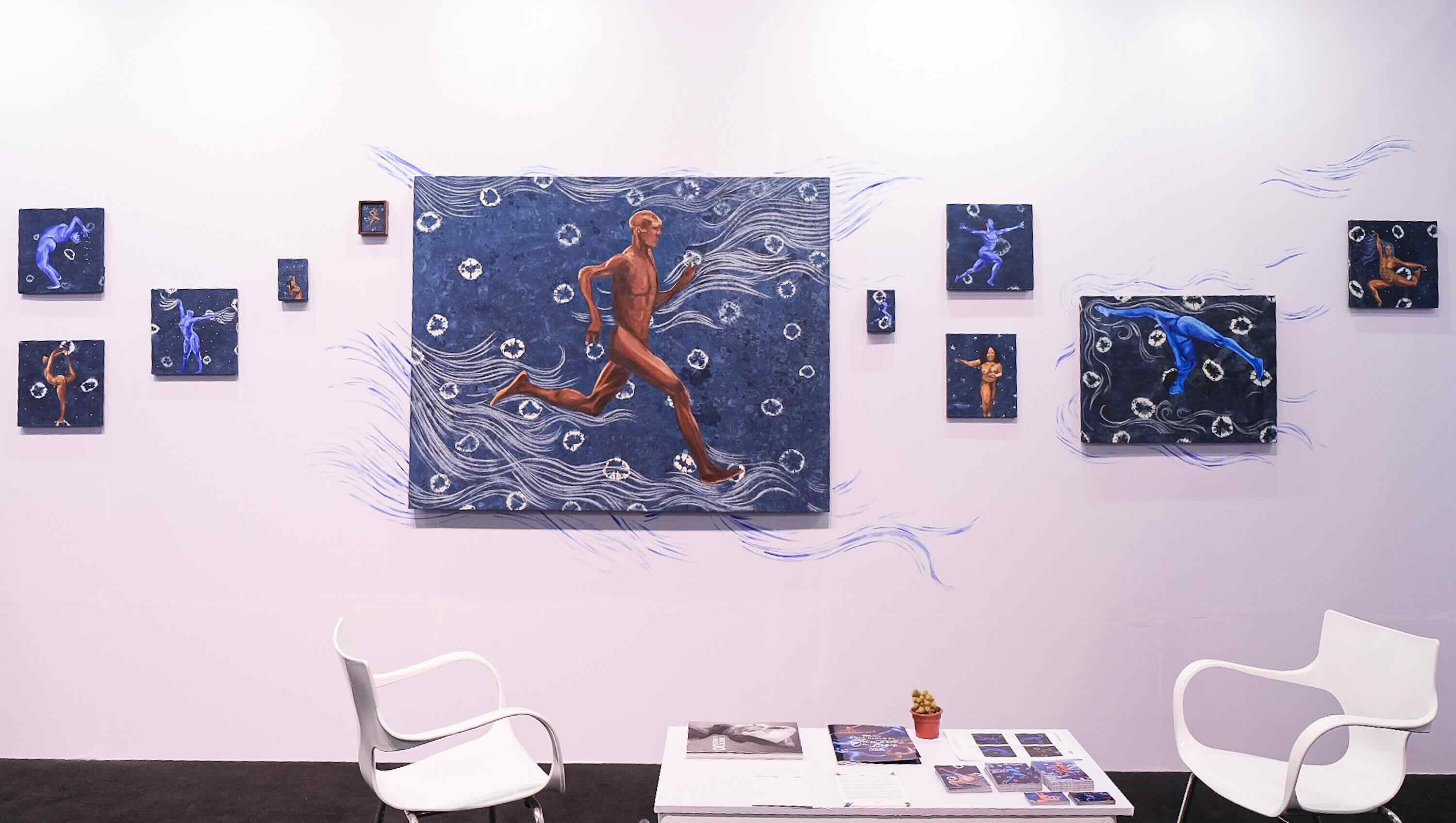
When Ṣọlá Olúlọ̀de's work appeared on the Hayward Gallery’s iconic billboard in London earlier this year, it was a moment of validation for an artist whose practice has always straddled worlds. Born in Britain to Nigerian parents, Olúlọ̀de's creates paintings that shimmer with the tension and harmony of dual belonging. Her canvases are love letters to Black womanhood, steeped in Yoruba cosmology, rendered in textures that speak to both Western art traditions and ancestral memory. But for all her international acclaim – collected by The Smithsonian, exhibited across Europe and America, there remained an unspoken question hovering over her rising trajectory: what does it mean to bring this work home?
In November, at Art X Lagos’ landmark 10th anniversary edition, that question found its answer. “Stars Fell on Lagos, ”Olúlọ̀de's first major solo presentation in Nigeria with Wunika Mukan Gallery, became more than an exhibition; it was a reckoning, a completion of a circle that began in the mythology and stories whispered through her childhood. The title itself, borrowed from the language of celestial wonder, suggested both arrival and belonging, as if the universe had conspired to return something precious to its rightful place.
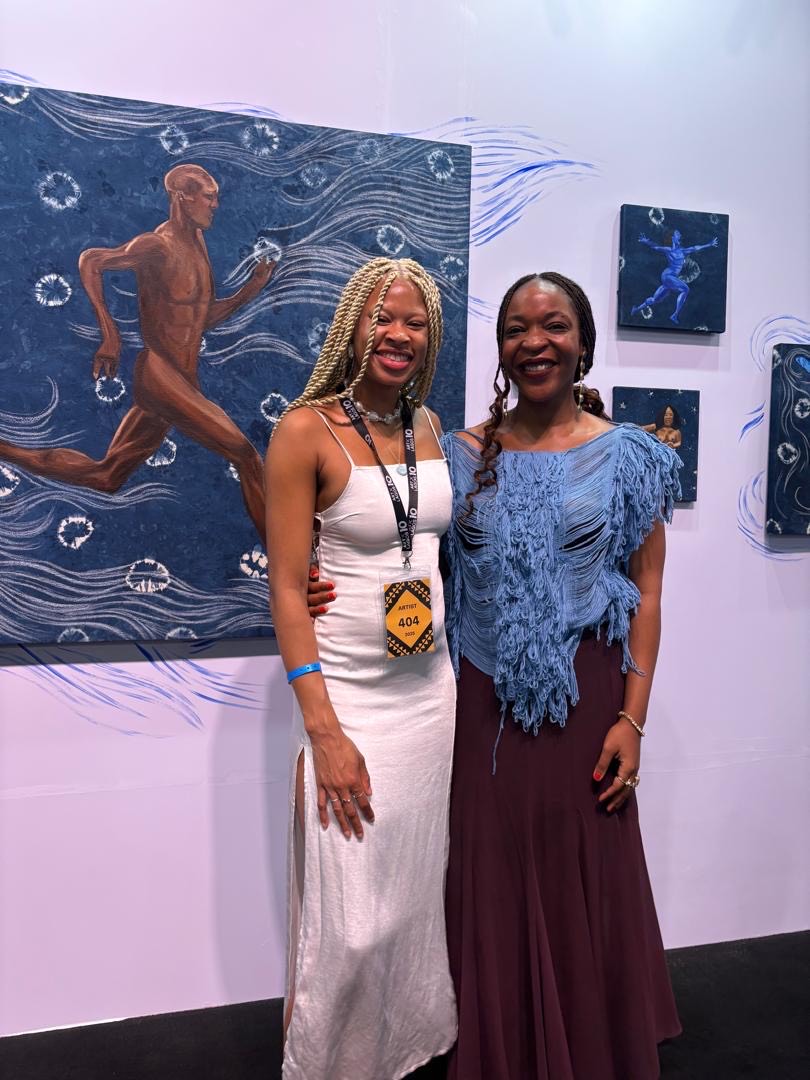
Now with the fair concluded and the paintings returned to storage, the reverberations of that homecoming continue. In reflecting conversations with Olúlọ̀de's and Wunika, the gallery’s visionary director, what emerges is a portrait of artistic return that complicates easy narratives of diaspora. This wasn’t simply a Nigerian-British artist coming “back” to roots she never planted herself. Instead, it proved to be a sophisticated negotiation of heritage and identity – a lived exploration of how an artist trained in Western institutions can create work that speaks fluent Yoruba, and what it actually means when that work finally stands before audiences who can recognize every symbol, every reference, every invocation embedded in the paint. "There's something profound about creating work about a place you carry inside you but haven't fully inhabited, "Olulode reflects now, looking back on the experience. This tension, between inherited knowledge and lived experience, between artistic interpretation and cultural authenticity, animated everything about "Stars Fell on Lagos." For Wunika Mukan, whose gallery has become a crucial bridge between Nigeria's contemporary art scene and the international market, presenting Olulode's work
represented a larger mission: creating space for diaspora artists to be in genuine dialogue with thecontinent, not as tourists or cultural ambassadors, but as artists whose relationship to African heritage is complex, personal, and deserving of nuance. The presentation, which ran from November 6-9, 2025, at the Eko Convention Centre, drew significant attention from collectors, curators, and cultural commentators. But beyond the commercial success or critical reception, the exhibition posed profound questions about the nature of homecoming itself: Can you return to a place you've never been? Can art made in distance speak truth to proximity? And when the stars finally fell on Lagos, what did they illuminate about the space between memory and belonging? The answers, it turns out, are more nuanced and more hopeful than either artist or gallerist anticipated.
Now that 'Stars Fell on Lagos' has happened and Nigerian audiences have seen your work in person, what surprised you most about how people engaged with the paintings?
Answered by Solá Olúlọ̀de
Yeah, when I'm exhibiting in other parts of the world, there tends to be a lot of curiosity and confusion about the material I'm painting on or working with. You know, people aren't used to seeing canvas treated that way. Occasionally, you'll get someone saying, "Oh, is this batik? I remember doing that at school," or "What material is this? Are these jeans?" And I'm like, "No, it's just normal canvas, but I've dyed it. I've used tie-dye or batik, and then I've painted over it with more recognizable materials like oil paint, oil bars, and pastels." But when I'm exhibiting in Nigeria, there's instant familiarity. People connect with the work immediately because Adire is so common here. People see indigo-dyed cloth throughout their daily lives. That, for me, is something really special—being able to share the work with a Nigerian audience, to remove that confusion from it, and just have something feel normal.
You've shown this work in London, across Europe, in American institutions, places where the Yoruba symbols and Nigerian cultural references require explanation or context. At Art X Lagos, you were showing to audiences for whom these aren't exotic references but lived culture. How did that shift change the work's meaning, if at all?
Answered by Solá Olúlọ̀de
I always try to create an atmosphere that makes the audience feel something positive. For this series, I wanted to evoke mysticism and magic. One reaction that stood out was someone saying thework made her feel hopeful as she searched for a new chapter in her life. I hadn’t expected that, but it made sense as my figures were based on athletes and Olympians whose discipline and achievements inspire me to aim higher. Showing this work at Art X felt like a personal milestone. I used to dream of moments like this early in my career, so being able to realize them now and share that sense of dreaming with others means a lot. Bringing the work home was important to me. My artistic growth is rooted in studying Nigerian art during my degree, discovering materials, craft traditions, and techniques I hadn’t seen before. From woodwork and welding to dyeing and textiles, these methods continue to shape my practice. Even as production has declined, Nigerian textile traditions remain a powerful presence, and they deeply influence the way I create.

There's often an unspoken pressure on diaspora artists; a question of 'are you Nigerian enough?' or 'do you have the right to claim this heritage?' Did you feel that pressure at Art X Lagos? How did Nigerian viewers respond to your interpretation of Yoruba cosmology and Nigerian childhood culture?
Answered by Solá Olúlọ̀de
I’ve never felt, as a Nigerian artist in the diaspora, that I needed to prove I’m “Nigerian enough” or justify my connection to my heritage. I am Nigerian—British, and that identity is simply part of who I am. The textiles and cloth that influence my work are elements carried throughout the diaspora, but I’m not claiming to represent narratives or cultures directly from the continent. My work comes from my place within the British-Nigerian diaspora. I draw from both my Nigerian and European experiences, weaving together the different parts of my background and arts education. Because of that, no one really feels the need to question my authority. I’m not positioning myself as an expert in indigo adire; in fact, I’m here on this residency to learn more and deepen my understanding. What I create is an ode to Nigerian textile traditions, my own interpretation, not a definitive representation of the culture. It reflects me, my life, and the different worlds I belong to.
Homecomings often change us in ways we don't expect. Now that you've completed this return, now that your work has stood in Lagos and been received by Nigerian audiences, does your relationship to your Nigerian identity shift?
Answered by Solá Olúlọ̀de
I love my home in Brixton, but for years I’ve felt the urge to experience life somewhere warmer, with a strong Black and arts community. Being in Lagos this time made me realize I could actually live here for a while. I’m even sorting out my Nigerian passport during this trip, and I hope to return for a longer stay. I want a consistent relationship with Lagos, not the distant one my family had, visiting only every few decades. Coming once a year would be perfect, especially now that I’ve built friendships and connections I want to nurture. This is my third homecoming, and each visit has deepened my familiarity with the city. I’m learning the areas, the people, and where I fit. The more I explore and meet others in the art scene, the more inspired I feel to spend time here and grow. My presence here has even encouraged my family to reconnect with Nigeria. My dad visited last year for the first time in 30 years, which was really special. Experiencing Lagos’ art world has pushed me to be more intentional in my practice. Artist talks and exhibitions have inspired me to experiment further with my materials and the environments I create on canvas. I’m excited to get back into the studio and explore everything this trip has sparked.
You took a risk presenting a diaspora artist's first major Nigerian solo at Art X Lagos's 10th anniversary, a milestone moment when you could have played it safe with established continental artists. Now that it's done, how did Nigerian collectors, curators, and audiences actually respond?
Answered by Wunika
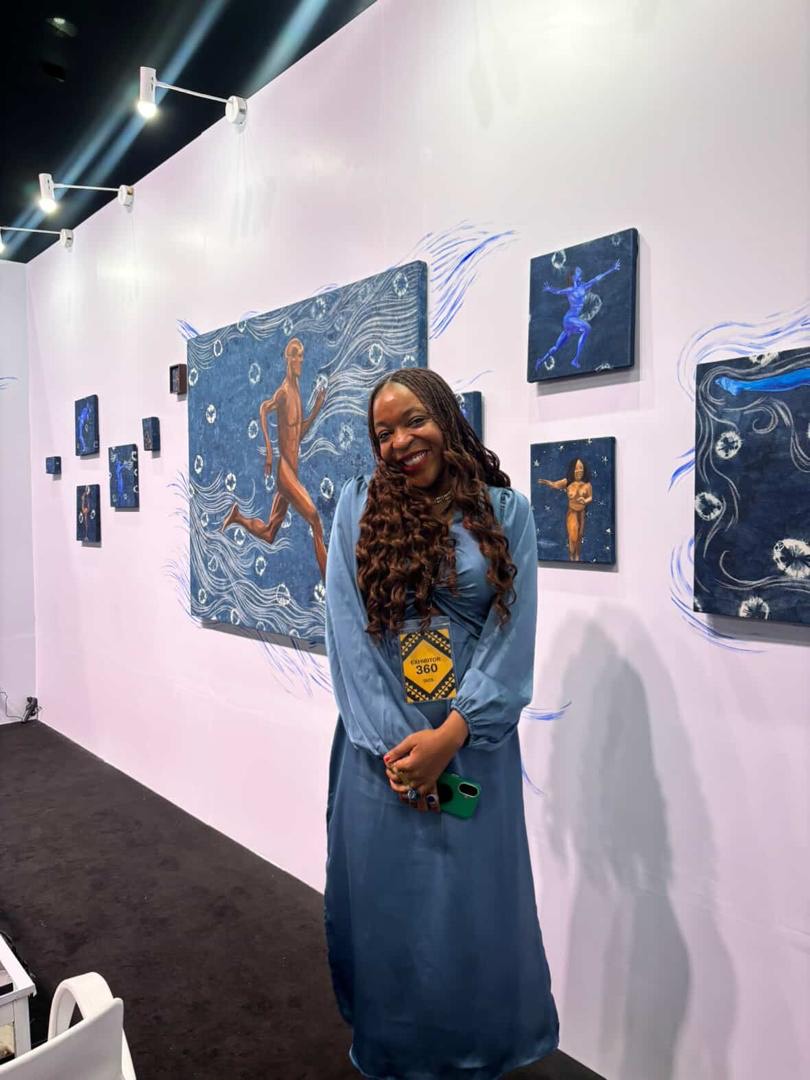
This presentation really catapults us into next year. It gives the gallery momentum—wind under our wings—to continue playing an important role in helping artists find new markets, new audiences, and new voices. The collaboration went incredibly well, just as we expected, and it has encouraged us even more to keep bringing fresh perspectives into Lagos while also discovering new ones ourselves. We already work closely with many young local artists in our Lagos gallery, and we plan to continue that. But what excites me is the exchange we can create, artists from around the world coming into Nigeria, and our artists going out and learning, sharing, and growing. This homecoming exhibition has reinforced that desire. Seeing the joy and the connections Ṣọlá is building beyond us is amazing, and it all feeds into the work we do. We’re genuinely excited for the year ahead. We’ll be showing several international artists in our Nigerian gallery, and we also look forward to taking our artists abroad and seeing what opportunities next year brings.
Art fairs are ultimately commercial spaces; people vote with their wallets. What did the sales (or inquiries, or conversations) around Sola's work tell you about Nigerian collectors' readiness to invest in diaspora artists?
Answered by Wunika
This is a brilliant question. Personally, I navigate these tensions by not showing only Nigerian artists. I’ve shown South African, Zimbabwean, American, and white British artists as well. The conversation around who gets to represent African art is valid, and it requires balance. We must acknowledge that disparities exist; people often receive more opportunities simply because of where they live. So it’s up to those of us with platforms to be aware of this and to correct for it where we can. With Ṣọlá, I understood the importance of having her in Lagos. She is Nigerian, even though she was born and raised in the UK, and she is deeply engaged with what’s happening here. She applies for residencies, she’s currently at GAS Foundation, and she consistently seeks ways to connect with the continent. She understands that this place is a source, and she actively enriches her practice with that knowledge. These are the kinds of artists I gravitate toward, artists who are genuinely invested in exchange. Ṣọlá will learn from Lagos, but she will also bring knowledge, perspective, and value to the community here. That reciprocity matters.
The exhibition title, 'Stars Fell on Lagos', suggests something celestial, almost fated, about this homecoming. Does this presentation set a template for how you'll work with other diaspora artists, or was this a unique moment?
Answered by Wunika
Thank you for this question; it’s a really important one. Showing Ṣọlá at Art X, especially for their 10th anniversary, was a bit of a risk. Her work depicts dreamlike, intimate scenes where figures are intertwined, celebrating relationships, often queer, sometimes lovers, sometimes sisters, sometimes whatever the viewer imagines. Her work is about warmth, tenderness, and connection, rather than explicit sexuality. Although I had shown her in Nigeria before in 2021, and she’s also the November GAS resident, the fair initially expressed concern because homosexuality is illegal in Nigeria. Their lawyers advised that we couldn’t show certain works. It surprised us, but we understood and had a conversation with Ṣọlá. In true Ṣọlá fashion, she adapted—her series featured nude characters, but in a way that celebrated Black bodies as celestial, suspended in indigo, and evoked tenderness and dreamlike energy rather than sexuality.
Nigerian collectors can be conservative regarding nudes, but the works were received exceptionally well, and we had a successful fair. This, to me, is exactly what art fairs should do: challenge audiences, provoke thought, and inspire collectors. We felt confident showing Ṣọlá, and it truly paid off.