On International Women's Day 2026, the real story isn't investment. It's ownership.
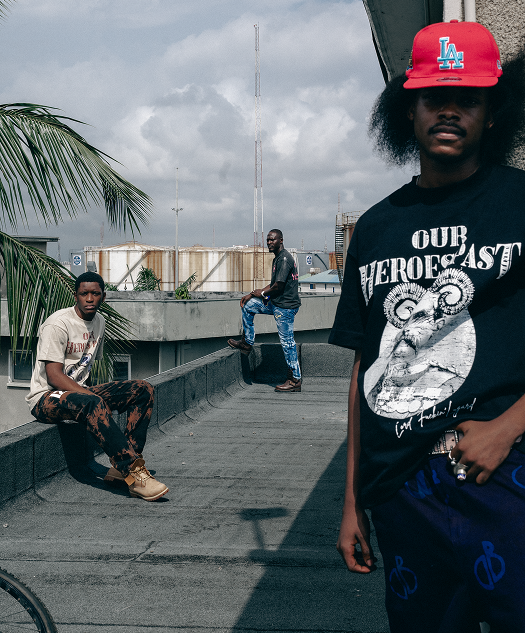
Bata%20Na%20BISO%20(Our%20People)%20is%20a%20photographic%20series%20that%20celebrates%20the%20vibr.jpg)
The official theme for International Women's Day 2026 is "Give to Gain." The logic behind it is sound enough: invest in women through resources, education, and mentorship, and the returns flow outward. Economies grow. Communities stabilise. Workplaces improve. The framing is backed by data, endorsed by institutions, and repeated across boardrooms and keynote stages worldwide. It is also, in a quiet but important way, incomplete."Give to Gain" positions women as the recipients of a transaction. Someone gives, women gain, the world benefits. It is a generous frame, but it is still a frame built around access and opportunity, not agency and ownership. When you look at what African women are actually building right now, the story being told in practice is a different one entirely.The United Nations' accompanying theme, "Rights. Justice. Action. For ALL Women and Girls," gets closer to the real terrain. Not because it is more radical in tone, but because it names three things in sequence, and that sequence matters. Rights are the foundation. Justice is what gives rights meaning in practice. Action is what happens when women stop waiting for the first two to arrive on their own. African women, in 2026, are deep in the third stage.
The data is not abstract. Women currently hold 64% of the legal rights that men hold worldwide. At the current pace of progress, it will take 286 years to close that gap. That is not a projection. It is a verdict on the systems tasked with delivering equality.
On this continent, the picture is uneven in ways that matter. Constitutional reforms have happened. Electoral quotas have been introduced across multiple African countries. Access to education for girls has expanded. These are real gains, and they deserve acknowledgment. But entrenched patriarchal norms, persistent economic exclusion, and the distance between what the law says and what women actually experience in their daily lives, those gaps remain wide.
Rights, in other words, are not yet a foundation. They are still, for many, an aspiration.
Justice is where rights either become real or remain symbolic. And the distance between those two states is where most of the work still needs to happen.
In Ghana, a workshop held in December 2025 on protecting women's political participation made the case plainly: legal safeguards are meaningless without institutions strong enough to enforce them. Women continue to face violence and exclusion in political processes not because the law permits it, but because the systems designed to prevent it are too weak, too slow, or too indifferent to act.
Across the continent, African feminist movements have grown increasingly precise about this distinction. At the Africa Regional Convening ahead of Women Deliver 2026, the message coming out of Nairobi was direct: budgets, not promises. Civic space, not symbolism. Implementation, not headlines. The frustration behind that language is earned. Decades of frameworks, protocols, and declarations have produced real structural change in some places, and almost none in others. Justice, as it stands, is unevenly distributed.
This is the context into which "Give to Gain" lands. When the infrastructure for justice is unreliable, investment alone is not enough. What matters is who controls the terms.
This is where the story shifts. Because the most significant thing happening among African women in creative and cultural industries right now is not a response to investment. It is a refusal to wait for it.
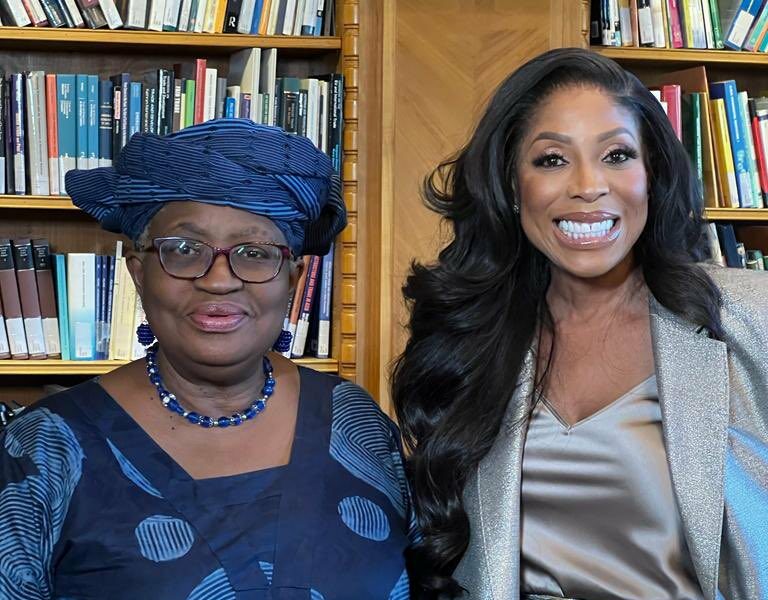
Mo Abudu has spent over a decade building EbonyLife Media into one of the continent's most consequential production houses. Last year, she launched EbonyLife ON Plus, a membership-based streaming platform designed specifically to keep the value of African storytelling on the continent. The logic is straightforward and unambiguous: own the infrastructure, or someone else sets the terms.
In Senegal, Diarra Bousso returned from Wall Street to Dakar and built DIARRABLU from her parents' rooftop. The brand uses proprietary mathematical algorithms to generate designs, submits them to a community vote before a single garment is cut, and produces entirely on demand. The supply chain is almost entirely Senegalese artisans. The intellectual property, the algorithms, the methodology, the design system, belongs entirely to her. Nothing in that model requires someone else to give first.
In South Africa, Mohale Mashigo served as narrative director of Relooted, a video game in which players recover 70 real African artefacts from Western museums and private collections. Every artefact in the game maps to a real object with a documented history belonging to a named people. That specificity is not incidental. It is structural. The world of the game is built so it cannot be detached from its context and repurposed by someone else. Culture travels differently when it is self-authored.
These are not parallel stories. They are the same argument made in three different disciplines: find the point in the chain where value is captured, and own it.
None of this is to say investment is irrelevant. Women-led creative businesses across Africa remain drastically undercapitalised. In Nigeria, women receive less than 10% of available funding in the creative sector, often below 1% in disclosed deals. The funding gap is real, and closing it would matter.
But the women rewriting the terms of African cultural production are not doing so because capital arrived. They are doing so despite its absence. The gains are not downstream of the giving. The gains are the result of African women building systems that do not require permission to function.
Kirsty Coventry of Zimbabwe became the first African and first woman elected President of the International Olympic Committee in 2025, leading the global institution that once celebrated her as an athlete. Ayra Starr became the first Nigerian woman in 16 years to win Best African Music Act at the MOBOs, not by adapting to the market but by expanding what the market recognises. These are not stories about access granted. They are stories about presence asserted.
International Women's Day will produce thousands of posts today. Themes will be cited, statements will be issued, and the language of investment and empowerment will circulate freely.
The more useful question, the one worth sitting with beyond today, is simpler:
are African women in control of more of what they create, distribute, and decide than they were a year ago?
Rights without justice are promises. Justice without action is procedure. What is happening on this continent, in studios and boardrooms and design studios and legislative chambers, is action. And it is not waiting for the giving to begin.