Stay In This World
The stories, the culture, the conversations. Every week.
No spam. No third parties. Just Unruly.
How Yoruba Spirituality Survived the Atlantic, Transformed in Brazil, and Returned Home

At the 2026 São Paulo Carnival, Mocidade Alegre, one of São Paulo's most celebrated samba schools, the community organizations that prepare all year to compete in Carnival parades, carried 10,000 litres of water in tribute to Yemọja, the Yoruba Orisha of water and motherhood. The 13-meter structure became the centerpiece of a performance that would win them their 13th Carnival championship. But this wasn't spectacle for spectacle's sake. It was cultural memory made visible—a 400-year-old story of preservation, survival, and reconnection playing out on one of the world's biggest stages.In the video that went viral across Nigerian and Brazilian social media, a man embodying Èṣù moved with precision and reverence. His comment later captured something profound: "I am initiated in the traditions of Èṣìn Òrìṣà Ìbílẹ̀. I am Brazilian and a son of Orunmila–Ifá, honoring the traditions that were possible to reclaim. I take great pride in all of this! And it is a great honor to embody Èṣù, the Owner of the Paths and of Communication, the Order of the Universe, on the Carnival avenue here in Brazil. Thank you to all my Yoruba brothers and sisters. One day I will go to the Land of my ancestors to celebrate Èṣù with you. Asè!"This is the story of how that became possible—how Brazil became, in many ways, a guardian of Yoruba spirituality that Nigeria itself had to relearn.
Between the 16th and 19th centuries, approximately four million Africans were transported to Brazil through the transatlantic slave trade, notably more than to any other part of the Americas. The final and most intensive wave, from roughly 1790 to 1850, brought hundreds of thousands of Yoruba people to Brazil, particularly to Salvador, Bahia. They arrived during the collapse of the Oyo Empire, a period of internal wars and invasions that made Yoruba people particularly vulnerable to enslavement.
In Bahia, enslaved Yoruba people, referred to as "Nagô" by the Portuguese, made up the last major wave of African arrivals. This timing proved crucial. Being the most recent arrivals meant Yoruba cosmology, language, and religious practices were still vivid in memory when Brazil abolished slavery in 1888. They hadn't yet been worn down by generations of forced assimilation.
But survival required adaptation. Enslaved people were compelled to adopt Catholicism, but they developed a strategy: syncretism. Yoruba Orishas were associated with Catholic saints, allowing worship to continue under the cover of Christianity. Ọya became Saint Barbara. Ògún became Saint George. Yemọja became Our Lady of Immaculate Conception. On the surface, they prayed to saints. Underneath, they honored the Orishas.
This wasn't compromise, but rather, it was preservation under duress. And it worked.
What emerged was Candomblé, an Afro-Brazilian religion that preserved core elements of Yoruba cosmology while adapting to Brazilian reality. The earliest terreiros—temple spaces where worship and ceremonies take place—appeared in Salvador in the early 19th century. The Ilê Axé Iyá Nassô Oká, also known as Casa Branca, was founded around 1830 by Iyá Nassô, a Yoruba priestess who had been enslaved but later freed. Her terreiro became the foundation from which the Nagô tradition of Candomblé descended.
Candomblé maintained Yoruba religious structures: veneration of Orishas, spirit possession during ceremonies, drumming and dance as worship, divination practices, ritual offerings. But it also transformed. The pantheon narrowed—agriculture-related Orishas were largely abandoned since enslaved people had no reason to protect slave owners' harvests. Family lineage deities gave way to a more universal pantheon that could unite people from different Yoruba sub-groups separated by enslavement.
What's remarkable is how much survived intact. Yoruba words and phrases remain in Candomblé liturgy. The cosmology—belief in a supreme creator (Olodumare), intermediary Orishas, and axé (vital life force)—stayed fundamentally Yoruba. The ritual structure, the role of priestesses and priests, the importance of spiritual kinship, all carried forward.
Today, millions of Brazilians practice Candomblé or Umbanda (a related syncretic religion). Cities like Salvador are sometimes called "the most African city outside Africa," where Yoruba cultural influence is woven into food, music, language, and daily life.
The story doesn't end with preservation in Brazil. In the mid-19th century, after slavery was abolished, unexpectedly, freed Afro-Brazilians began returning to West Africa.
Starting in the 1830s and intensifying after the 1835 Malê Rebellion—a Muslim-led slave uprising in Bahia that was brutally suppressed—thousands of freed and freed-born Afro-Brazilians migrated to Lagos, Ouidah, and Porto-Novo. They settled primarily in Lagos, where the Oba granted them land in what became known as Popo Aguda, the Brazilian Quarter.
These returnees—called Agudas or Amaros—brought Brazilian culture back with them. They built in Portuguese-Brazilian architectural style, with arched windows, stuccoed walls, and iron balconies. They were skilled artisans—masons, carpenters, tailors, clerks—and became a prosperous bourgeoisie in colonial Lagos. They practiced Catholicism but some also worshiped Orishas they had maintained in Brazil. They held festivals like Caretta and Bonfim (Brazilian Catholic and cultural celebrations) that mixed Brazilian and Yoruba traditions.
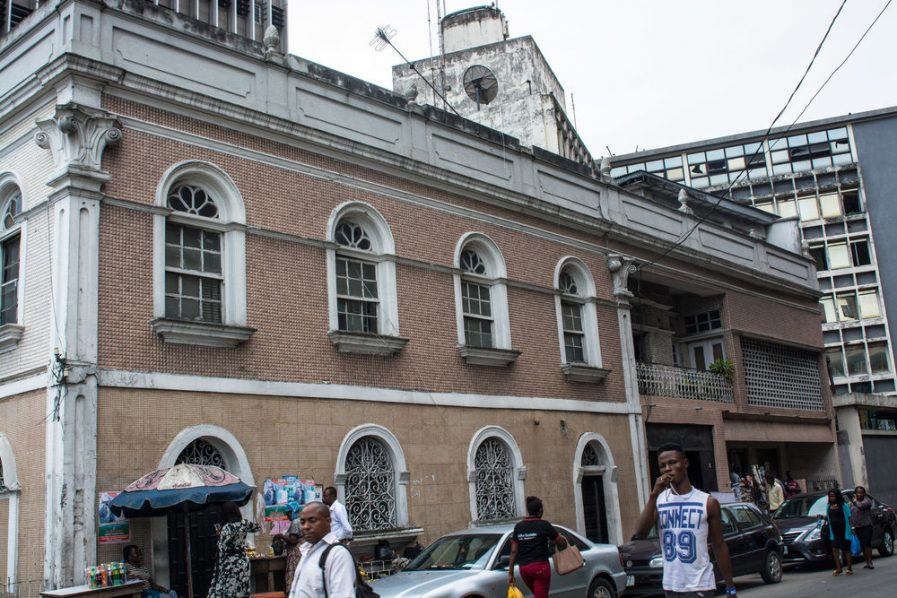
The Agudas were, in a sense, cultural translators—people who had lived as Yoruba in Africa, been enslaved in Brazil, absorbed Brazilian and Catholic culture, and then returned as something hybrid. Indigenous Lagosians called them "black whites" because of their Western dress and Catholic faith. Yet they had preserved Yoruba spirituality in forms that, in some cases, were more intact than what remained in Nigeria after decades of British colonialism and Christian missionary activity.
Today, surnames like Da Silva, Martins, Da Costa, Pedro, and Cardoso mark Aguda descendants in Lagos. The Brazilian Quarter still exists, though many of its 19th-century buildings are in decay. But the cultural connection endures—festivals, architecture, culinary traditions, and most importantly, a shared spiritual lineage.
Here's the complexity: in some ways, Brazilian Candomblé preserved Yoruba religious practices that Nigeria itself had to rediscover.
When Christianity and Islam spread through colonial Nigeria, traditional Yoruba religion diminished significantly. Many practices were suppressed or abandoned. What's practiced in Nigeria today as "traditional Yoruba religion" has, in some cases, been influenced by Candomblé practitioners who maintained unbroken lineages of knowledge through slavery and into the present.
This isn't to say Candomblé is "more authentic" than Nigerian Yoruba practice—both evolved, both adapted. But Brazil's preservation was different because it happened outside the direct colonial pressure Nigeria experienced. Candomblé developed its own theology, its own priesthood structures, its own relationship to Yoruba cosmology.
When Mocidade Alegre honored Yemọja at the São Paulo Carnival 2026, they were honoring a deity who has been worshiped continuously in Brazil for over 200 years. The float with 10,000 litres of water wasn't just artistic flourish—water is Yemọja's domain, her essence. The performance was spiritually grounded, created by practitioners who understand the theology, who have been initiated, who carry the lineage.
And the recognition flowed both ways. Nigerian Yorubas seeing the performance expressed gratitude, surprise, kinship. The man embodying Èṣù spoke of wanting to visit "the Land of my ancestors" to celebrate with Yorubas in Nigeria—a circular pilgrimage completing what began 400 years ago.
This is cultural preservation as living practice, not museum exhibit. Yemọja in São Paulo isn't appropriation or performance, it's inheritance. It's what happens when people refuse to let their cosmology die even under the worst conditions imaginable. It's proof that culture can survive, transform, and return stronger than the systems that tried to destroy it.
The conversation between Brazilian and Nigerian Yorubas continues—through music, through spiritual pilgrimage, through moments like Carnival 2026 when the Atlantic becomes not a barrier but a bridge. The same ocean that carried enslaved people away now carries recognition, respect, and reconnection back.