Stay In This World
The stories, the culture, the conversations. Every week.
No spam. No third parties. Just Unruly.
On cooking from memory, translating heritage, and what it actually means to hold three culinary traditions in one kitchen.
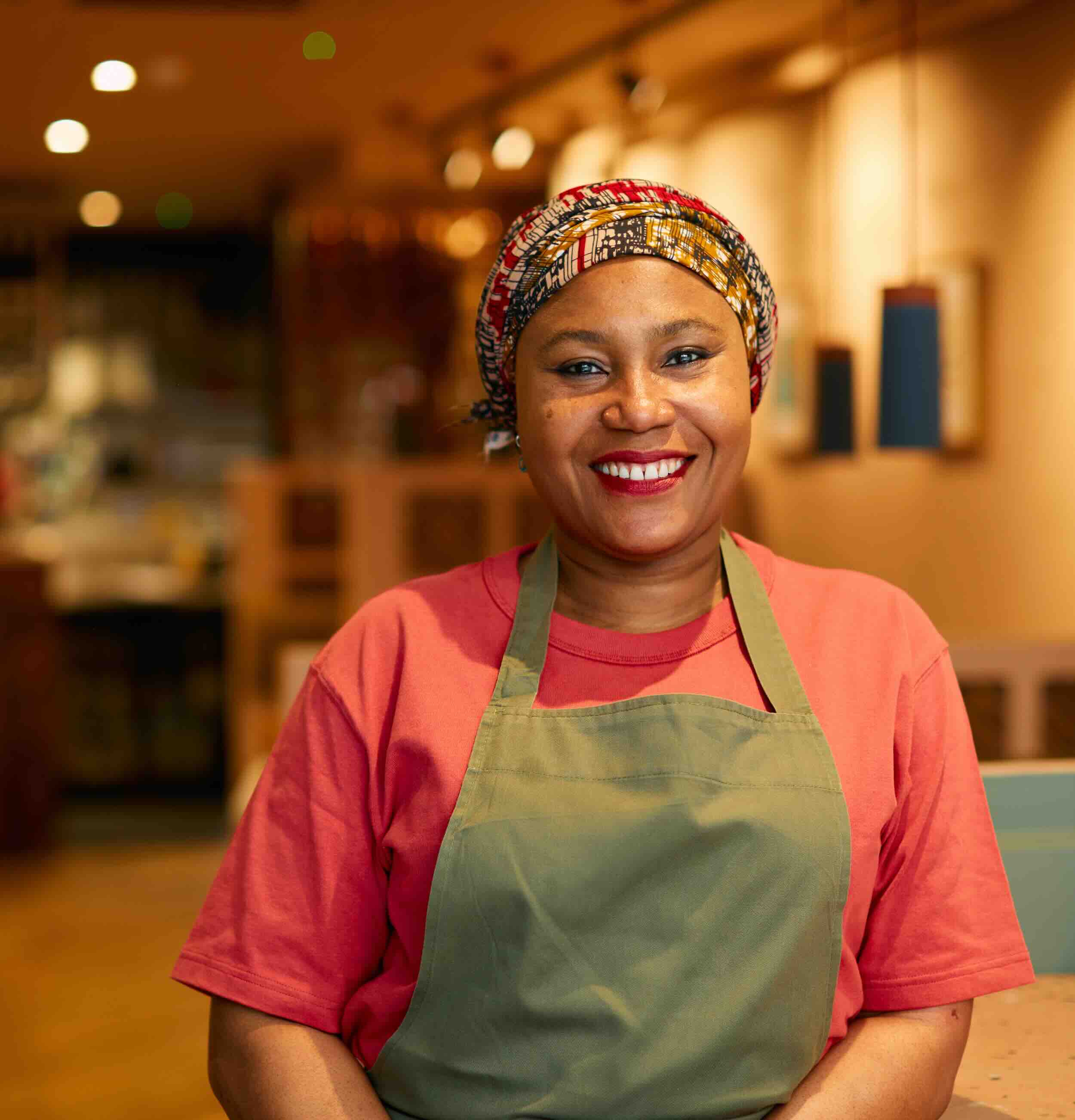
The name says everything, if you know what it means. Chishuru is a Hausa word. Literally it translates as "eat in silence," but the more precise meaning is the silence that descends on a table when the food arrives. Not the silence of formality or restraint. The silence of something stopping you mid-sentence because what just arrived in front of you demands your full attention.
Joké Bakare is the first Black female chef in the United Kingdom to be awarded a Michelin star. That is the sentence most pieces about her lead with, and it is true and significant and worth saying. But it is also, in some ways, the least interesting thing about what she has built in Fitzrovia. The more interesting story is how she built it, where it came from, and what it is actually trying to do.
Joké's father is Yoruba, her mother is Igbo, and she grew up in the Hausa region of Nigeria. Those three culinary traditions sit on the Chishuru menu together, and Joké is precise about what that means and what it does not.
"They're all part of my heritage," she says. "They all have equal importance to me. I'm not mixing them together just to make a 'Nigerian' menu, it's because they're all part of me."
The distinction matters. There is no such thing as Nigerian cuisine, she has said this in multiple contexts and means it specifically. Nigeria is a vast country with culinary traditions that predate the lines on any map, and some northern Nigerian dishes are more likely to be found in northern Ghana than in southern Nigeria. The Chishuru logo reflects this: three characters from Nsibidi, a proto-language from western Africa, meaning three waters, symbolising those three distinct culinary traditions.
What the restaurant holds is not a synthesis or a fusion. It is a person whose palate was formed by the convergence of three distinct food cultures, cooking from that formation rather than reaching for it as a concept.
Joké has described herself as "a Londoner by way of Nigeria," and that phrase does a lot of work in understanding what Chishuru is trying to do. She left Nigeria nearly thirty years ago. She did not arrive in London as a trained chef. She worked in care, health and safety, and property management before starting in food with a van outside her church in southeast London. She sold pies, akara and puff puff on Sunday mornings. She ran supper clubs. She won a competition in a local paper that she nearly did not enter, which eventually led to a popup in Brixton Market in 2020. Jay Rayner reviewed it and the rest followed.
The food at Chishuru is not trying to be an authentic copy of West African cooking. That is a position Joké holds deliberately and defends carefully. "I'm not setting out to create an authentic version of the food of my heritage," she has said. "Rather, I'm just trying to present a version of the dish in a London context, with London presentation and professional cooking techniques."
What that looks like in practice: she takes dishes she ate growing up and breaks them down to their individual components, then reassembles them in a form that a central London kitchen can execute at a Michelin level without losing what made the original worth eating.
"The idea is that it might not look like the dish you know from your heritage, but it should absolutely taste like it. That's how we know when a dish is ready."
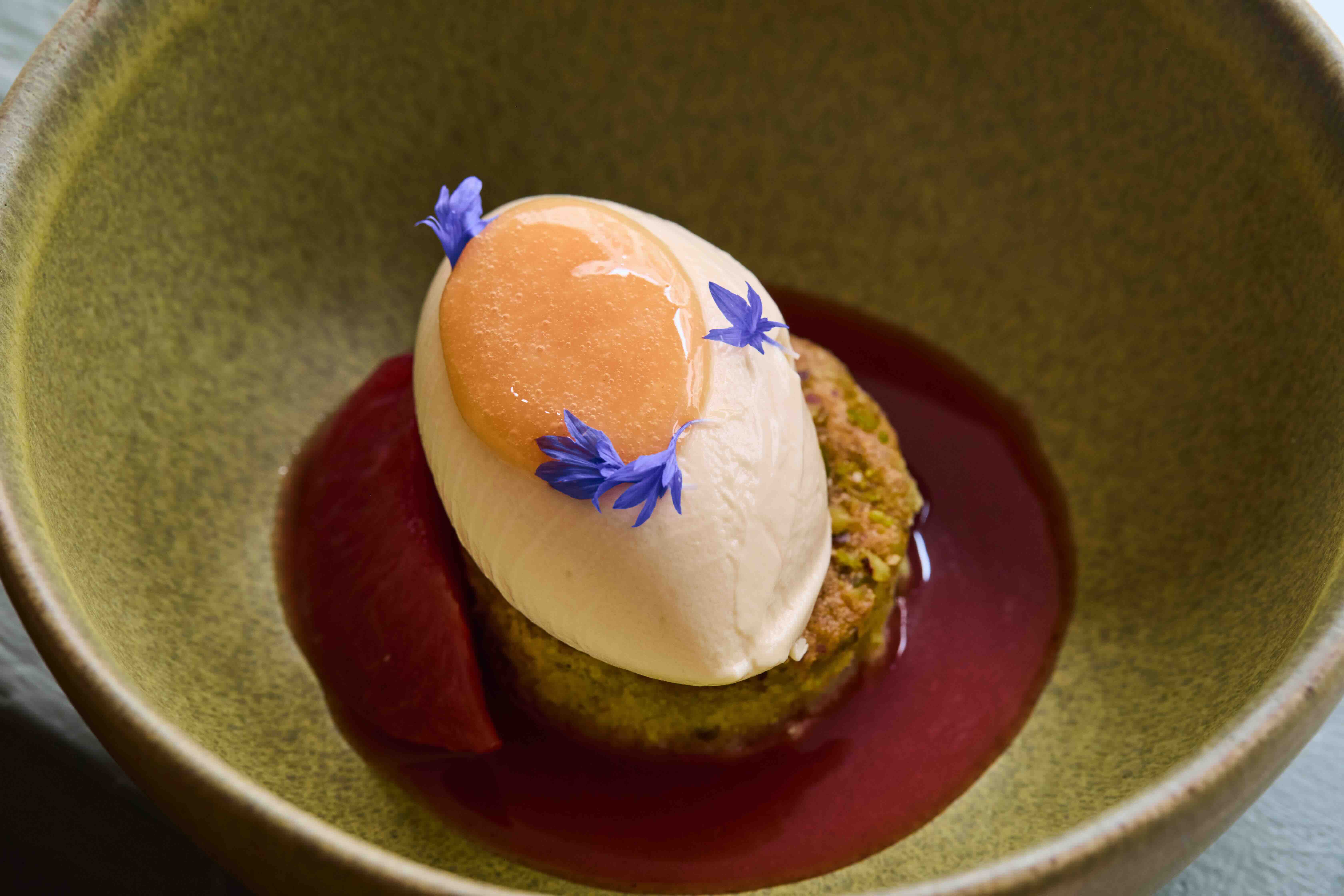
The ekuru, a wild watermelon seed cake topped with pumpkin seed pesto and served with Scotch bonnet sauce, has been on the menu since the beginning. It looks nothing like the version from her childhood. But, it tastes exactly like it should.
What makes the translation possible is not just the technique used. It is access to the right ingredients, and that access is much harder than it sounds.
Joké cannot get good plantain from normal restaurant suppliers. She has boxes driven up from Brixton Market twice a week. She goes to Dagenham for specialist spices. Her yaji, the spice blend used for grilled meats, is made by someone she knows in Nigeria and sent over. A Michelin-starred restaurant in the heart of Fitzrovia, sourcing its ingredients through networks that look nothing like the systems that supply most of its neighbors.
This is not a romantic detail about authenticity. It is a logistical reality about what it costs to do this kind of cooking at this level, and about how inadequate the standard supply chains are for cuisines that have not yet achieved the mainstream visibility of Italian or Thai or French. "We constantly have to explain what our dishes are, what our spices are," Joké says.
"It's so different to Western European cuisine, and other food cultures are much more widely known. We see ourselves as being in the very earliest stages of this cuisine becoming better known."
The seasonality question adds another layer. Because Chishuru operates within a London fine dining context, British produce and its seasonality is part of the discipline. The work is in using that produce in a way that remains sensitive to the heritage of the dishes rather than pulling them toward something they are not.
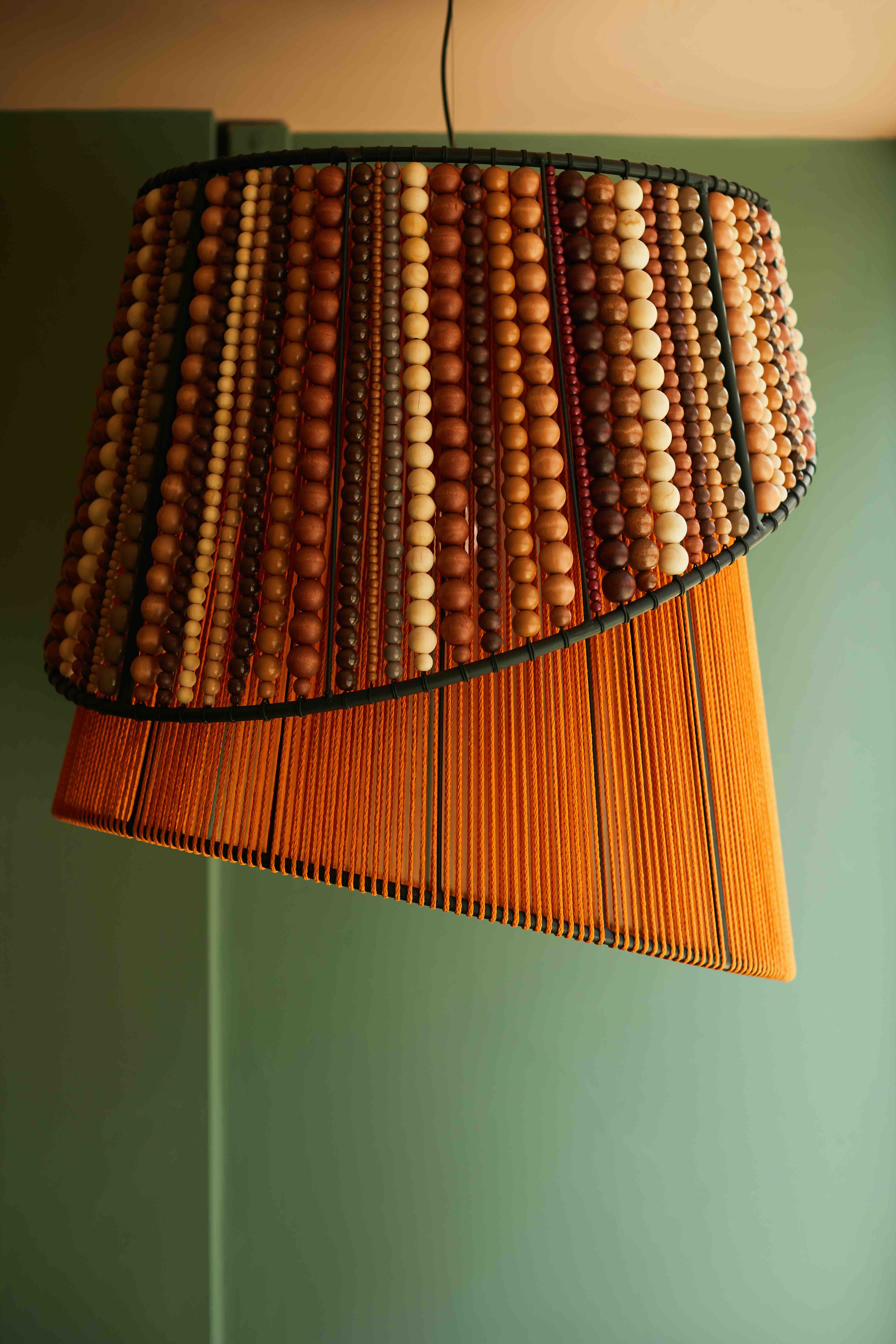
The atmosphere at Chishuru is not incidental. The large lampshade in the window uses Yoruba beadwork as its reference. The terracotta wall colors reflect the soils of northern Nigeria. The use of wood connects to the forests in western Nigeria. Every material decision has a point of origin.
"The intention has always been to feel West African while avoiding the usual tropes of generic Africanness," Joké says. The design is not performing Africa as an aesthetic. It is making specific choices about which aspects of specific places deserve to be present in the room.
The restaurant also refuses the conventions of formal fine dining, and this too is deliberate. Joké has described her ambition as running a happy, respectful kitchen where the experience feels homely and welcoming. The Michelin Guide, which has recognised for some years that great food can exist in informal settings, agreed. A Michelin inspector described Chishuru as "fun, full of life, generous and hugely enjoyable," a direct reflection of her personality and her cooking.
There are occasional visitors who arrive with arms crossed, older generations of Nigerians who come in expecting something more traditional and are prepared to be unimpressed. Joké is direct about what usually happens. "I'm very pleased that we usually win them over when they taste the food and understand what we're trying to do."
Joké raises one point that sits underneath everything else she is doing, and that deserves more space than it usually gets in conversations about her work.
West African food has been poorly documented. Unlike Italian or French cuisine, where centuries of cookbooks exist to preserve and transmit the knowledge, the culinary traditions of Nigeria and the wider region have been passed down through practice rather than paper. The knowledge lives in grandmothers, in the specific smell of uda that recalls a specific kitchen in a specific house, in the muscle memory of a dish made so many times it does not need to be written down.
"Our food has been poorly documented," Joké says. "It's important to hold on to what we have."
This is part of what Chishuru is doing that a description like "Michelin-starred West African restaurant" cannot fully capture. It is an act of documentation as much as it is an act of cooking. Each dish that is executed at the highest level, that survives the translation from a one-pot childhood memory to a single plated course in a Fitzrovia dining room, is a dish whose existence has been validated in a context where the rest of the world is paying attention. The silence that descends on a table when the food arrives. That is what the name has always been reaching for. At Chishuru, it keeps arriving.